1st August 2024
The morning of the 1st brought a much-needed shower of rain. Although it wasn’t enough to satisfy my watering-can-dependent vegetables, an afternoon thunderstorm added considerably to the water table, welcome news for farmers, allotment holders, and gardeners, though rather inconvenient for me.
At 5.05 p.m., Sean, Jim, and I caught the bus to Great Glen, picking up Paul in Kibworth en route. We had booked in for ‘Pie Night’ at The Yews. As we entered the pub, dark, menacing clouds rolled over the village, and a torrential downpour, the sort that could float the Ark, began.
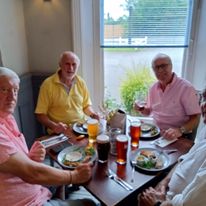
Thankfully safe and dry indoors, we watched the deluge from our window seat, quietly congratulating ourselves on our impeccable timing. We satisfied our appetites with a starter of crispy squid, followed by the ‘pie of the day’: chicken, leek, and Gloucester cheese. Absolutely delicious.
The hearty fare was washed down with several ales, and we rounded off the evening with sticky toffee pudding and ice cream.
We departed the Yews in time to catch the 8.16 p.m. bus to Harborough from the village Green.
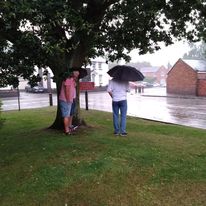

The cloudburst had passed by the time we ordered dessert, but ominously, on the short walk to the bus stop, the rain returned, rapidly escalating into a full-blown thunderstorm. Sheet lightning flashed constantly overhead, prompting concern as we huddled beneath a large tree with umbrellas extended (not the wisest move, I thought). The road quickly flooded, making it impossible to stand at the actual bus stop.
When the bus finally appeared, I stood on the Green and waved for it to stop, but was completely ignored by the driver. With the rain lashing down, I sprinted across the Green and stood waving in the middle of the road as the bus turned to exit the village. Instead of stopping, the driver leaned on his horn and accelerated! Leaping out of the way, we could only watch him vanish into the distance. It was the last bus of the day, and we had a problem.
Fortunately, just by the Green stood the Italian Greyhound pub, a warm and dry refuge from the storm. That’s where we decamped for further refreshments until Paul’s wife, Louise, kindly came to collect us. Frustratingly, the road back to Harborough was closed, so we had to take a lengthy detour along narrow, single-track lanes in the continuing tempest.
We eventually arrived at Willow Bank at 9 p.m., just in time for our usual Pool Night in the Garden Room. By the time we wrapped up at 11, the storm had thankfully moved on to torment the south of the country.
We took charge of Rocky and Nala late on the afternoon of the 2nd, when Jamie and Ruth dropped them off before a three-and-a-half-hour dash south to Hastings to see comedian Jimmy Carr that evening. They returned the following night to collect the dogs and reported that the humour had been quite “brutal”, probably not to Sue’s or my taste. As a thank-you, we were presented with the rather unusual combination of fudge and a kipper.
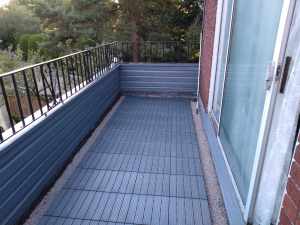
Earlier that day, I dismantled the decking on the bedroom balcony, which had begun to show signs of rot, and added it to an ever-growing mountain of winter fuel for the wood burner. Later on, I ordered replacement decking, a maintenance-free version made from recycled car tyres, courtesy of Amazon.

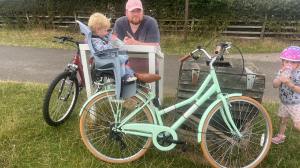

Sunday the 4th saw Sarah, Lee, and the children spending the day cycling around Rutland Water. Set in 3,100 acres of countryside, it features a 23-mile perimeter track (excluding the Hambleton Peninsula) that’s ideal for walking or cycling.
Jamie paid a visit to his allotment and returned with a bumper crop of tomatoes, while poor Charlotte ended up at Kettering Hospital. She posted on Messenger:
“Whilst making my own lard from lamb fat, when it had melted and was boiling, I poured it into a tub. I mistakenly grabbed plastic instead of glass (I do know better), and it went straight through the bottom in an instant and down my fingers. I just watched my skin roll down my fingers.”
Meanwhile, we had a quiet day at Willow Bank. A cheap dashcam I’d ordered from China (courtesy of Temu) arrived and, somewhat surprisingly, it works, at least for now, and is now installed in the Fiesta.
Sue managed two lengthy walks, and after picking three tubs of blackberries, I rustled up a very tasty Sunday lunch.
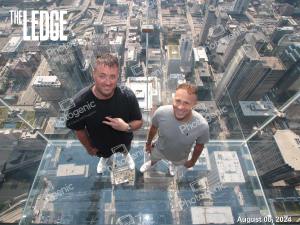
Jamie and Walker in Chicago
On the 7th, Jamie flew to Chicago. To ensure he caught his early morning flight, he stayed in an airport hotel the night before. It was his first time flying solo, and I think he was looking forward to the challenge. He planned to meet up with his friend Walker, who was in the city on business. After a few days of sightseeing in Chicago, they intend to catch the Amtrak Sleeper train to San Francisco, a 52-hour journey across the States. Once there, they’ll spend a few more days exploring ‘Frisco before flying back to the UK.
Over the next few days, I replaced the wooden decking on the bedroom balcony with a more eco-friendly alternative made from recycled tyres, with no annual painting required! I also changed the colour of the back garden fencing from red cedar to grey, which has really brightened up the area around the back door.
One day, I managed to shirk my usual catering duties when Sue and I had lunch at the Red Lion in Welham. We ate so heartily that we couldn’t face any more food at teatime. We had saved some of our lunch for the evening, but the badgers ended up enjoying that instead.


Feeling grateful for the hard work that restaurant staff in the Harborough area put into feeding the community, we opted for Sunday lunch at the nearest hostelry to Willow Bank. The Royalist, located on the southern estate, had been highly recommended, and rightly so. We enjoyed a high-quality, substantial meal and, once again, didn’t feel the need to eat again until breakfast the following morning.
The next day (12th) began with the distant rumble of thunder and the promise of rain, but the expected downpour never arrived. Just a couple of brief showers passed through before clearing skies, and an oppressive heat took over. It turned out to be the hottest day of the year so far, reaching 34°C.
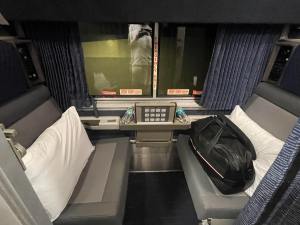

Jamie and his friend appear to have had a brilliant and very comfortable journey across the USA. Jamie took his laptop along and managed to get some work done during the less scenic stretches, when the views through the panoramic windows failed to hold his interest.
Exactly six weeks after Sue’s operation (14th), she was almost back to her old self and able to do a few light tasks around the house, with care, of course. Now legally allowed to drive again, she had begun preparing some meals and even doing the washing-up. Feeling confident enough to leave her on her own for a few hours, I drove to North Luffenham in Rutland for a short ramble with John. The previous few days had been oppressively hot and humid, but thankfully, the temperature had eased to a more manageable 26°C, with overcast skies, ideal walking weather. We met in The Fox car park at 9.45 a.m. and enjoyed a pleasant five-mile ramble through gently undulating countryside, returning around midday to savour an excellent steak and ale pie, washed down with a pint of local ale.
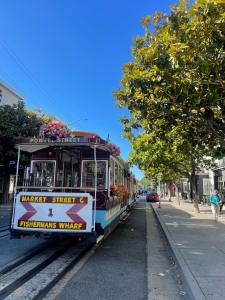
Meanwhile, having ticked off the essential tourist sights of San Francisco, including a tram ride, Fisherman’s Wharf, the Golden Gate Bridge, and a boat trip to Alcatraz, Jamie and his pal checked out of the Fairmont Hotel atop Nob Hill and flew back to the UK.



The east of the UK has been experiencing notably dry conditions for August, in stark contrast to the west and north, where regular heavy downpours have been the norm. At Willow Bank, the watering cans have been in daily use across both the allotments and the garden. Although no hosepipe ban has been imposed (unlike a few years ago when even the faintest hint of drought triggered restrictions), I still prefer to use a watering can. It may take longer, but it ensures that only the plants receive water, leaving the surrounding soil dry enough to keep weed seeds dormant, ultimately saving time on weeding.


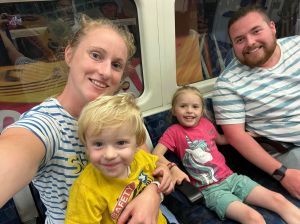
The fine weather has meant that Charlotte, despite the limitations caused by her scalded fingers, was able to complete work on her outdoor kitchen, which has now had its first use. Meanwhile, Ruth attended the wedding of her good friend Rupesh, who married Bhavna at the Hare Krishna Temple. Sarah and her family marked their wedding anniversary with a celebratory trip to London.
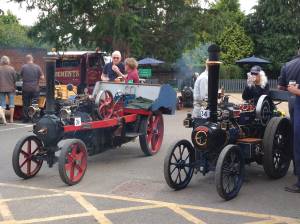
I was invited by Sean to visit the beer tent at the Marston Trussell Steam & Vintage Show on the 17th. Sue kindly gave us a lift to the village, and from there we walked to the showground, which was set across two large fields on the edge of the village. Disappointingly, we discovered there was an entrance fee of £10 each. As our only interest lay in the liquid refreshments on offer, we decided instead to walk to the Coach and Horses in Lubenham, thereby saving ourselves £20.
Upon arrival at the pub, I remarked to the barman on how quiet it was. He replied that at 5 p.m., when the Steam Show finished, the exhibits would be arriving for drinks. True to his word, an hour later, the large car park began to fill with steam-driven vehicles of all sizes, snorting and hissing as they arrived, many dribbling hot water from beneath. Wonderful! The sound and smell of steam engines instantly brought back childhood memories of train journeys to North Wales. Before long, the pub was heaving with friendly steam enthusiasts, keen to quench their thirst and enjoy some pub grub after a long, hot day of displaying their beloved machines. How fortunate could we be?
It was on the return walk back to Harborough that disaster struck. On the final incline on the outskirts of town, my usually sore left ankle suddenly imploded with excruciating pain, making it impossible to bear any weight. Though we were only 200 metres from home, I had no choice but to ring Sue, who kindly came to collect us and transported us both safely home.


Over the next few days, with my foot and ankle heavily strapped, I managed to complete painting the front fence and continued watering the vegetable plots. By Tuesday, with the help of Ibuprofen, I was able to accompany Sue on the children’s birthday gift, a trip to London. Charlotte, Jamie, and Sarah had clubbed together to buy us a tour of Buckingham Palace and its gardens.
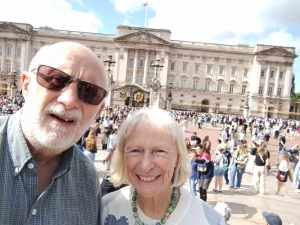
Charlotte kindly gave us a lift to Harborough Station to catch the 8:05 a.m. train to St Pancras. By 11 a.m., we were mingling with the crowd outside the palace’s iconic black and gold gates. We were fortunate to witness the Changing of the Sentries at noon before queuing briefly at Gate C, on the south side of the perimeter fence, to have our passes scanned.
We waited only a short while before our 12:15 p.m. group were briefed, notably warned against taking any photographs, and issued with electronic visual and audio guides. We were on the State Rooms and Garden Highlights Tour and were pleasantly surprised to discover that it was self-guided, allowing us to take as much time as we liked. And we took our time.

Our little machines were excellent, and the number of tourists was sensibly limited, so there was no queueing to view any of the State Rooms or their artefacts. In every room and corridor were numerous friendly, smiling security personnel, there to ensure that nothing was touched, and that no ‘sticky fingers’ wandered too close to the furnishings.
The guide devices seamlessly led us through the fifteen State Rooms open to the public, prompting us to pause and listen to snippets of history while highlighting the most notable pieces for our admiration. The building is opulent, steeped in history, and although I wouldn’t consider myself a royalist (I leave that to Sue), I was glad we came to see this iconic residence, instantly recognisable to much of the world.
Eventually, we followed the slow-moving trail of exhibits to the end, having thoroughly worked through the guide’s database of facts and descriptions. Emerging at the rear of the palace, we stepped into a beautiful sunny afternoon, and the inevitable café and souvenir shop. Surprisingly, the prices weren’t extortionate. We enjoyed some refreshments before browsing the well-presented tourist trinkets, then sat out on the verandah overlooking the gardens as we waited for our herbaceous tour to begin.

There were around ten of us, a mix of nationalities, following a young but very committed and knowledgeable guide on a forty-five-minute meander along paths still trodden by the current royals and dignitaries. It was a pleasant stroll, rich with interesting stories of the garden’s past and of the kings and queens who had enjoyed its views. However, for me, this little oasis in the heart of the capital was a slight disappointment; trees, grass, and a few rose beds do not make for a particularly captivating visit. Sue, on the other hand, enjoyed it.
Afterwards, we caught the tube back to St. Pancras Station and made our way to the nearby Lucas Arms pub. We had hoped to see Josie Clovis, whom we had met during a visit to Nepal. She and her daughter once ran this establishment, but sadly her daughter passed away shortly after returning to the UK, and Josie appears to have since moved to Turkey. We enjoyed a meal there before making our way back to catch the 8.06 p.m. train home.
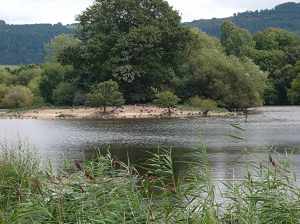
Two days later, on a dismal and much cooler day, we drove to the 17th-century family-run George Borrow Hotel, nestled in the stunning Cambrian Mountains of Mid Wales near Aberystwyth. On the way, we stopped for about an hour at a lakeside nature park just past Newport. After parking, we enjoyed our sandwiches in one of the hides beside a trail that skirted the southern shore of a small lake. The water and island teemed with wildfowl, and the air was filled with quacking and squabbling. Clearly, some feathery dispute was underway among the flustered, egg-laying residents.
We arrived at the hotel in a light drizzle, a couple of hours before check-in. Consulting Google Maps, we decided to explore Devil’s Bridge and the waterfalls, only a six-minute drive away.
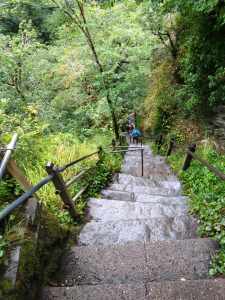
Parking was a challenge in the small lot next to the kiosk selling tickets for the forty-five-minute trail to the waterfalls. After a ten-minute wait, a car left, and we took its spot. By the time we paid the £4 entrance fee each, the rain had thankfully stopped. We had underestimated the terrain’s difficulty. After the first section, which led to the edge of a precipice offering a view of the waterfall and the remainder of the trail plunging down the cliff, Sue wisely chose to return to the car, only seven weeks post-operation; this was a challenge too far. I pressed on and was rewarded with spectacular views of the falls and the surrounding mountainside. The footing was tricky thanks to the earlier rain, but the effort was well worth it.
Returning to the car, we drove a short distance to the small village perched atop the ravine for a brief look around before heading back to our accommodation for the night. It was on the way back that we experienced a truly eerie encounter. As I drove along an isolated stretch of road between two mountains, a woman’s voice spoke to me in clear Welsh. Sue heard it too. We were both stunned and perplexed. Where had it come from, and what had she said? The radio was off, and the voice did not come from our phones. Sue thought it seemed to originate from the dashboard directly in front of me, and I was certain it came from the space just before my face, as though the woman was speaking to me personally. It definitely came from inside the car, yet we saw nothing; the windows were closed, and the road was deserted. Truly strange.
After checking in at the George Borrow Hotel, we relaxed in our room until it was time for our evening meal in the restaurant, then rounded off the night watching television.
Overnight, Storm Lilian swept across the country. At the hotel, we could hear the rain lashing against the bedroom window throughout the night, but by breakfast, the wind had died down considerably and patches of blue sky were beginning to emerge. It was 23rd August, Sue’s 70th birthday. After opening cards and presents, we made our way down to the restaurant and joined the other guests, some of whom had been camping nearby but had relocated during the night to the safety of the hotel after being drenched and nearly blown away.


After checking out, we began our journey to Cranog Cwtch, a small cottage in the village of Trefin, Pembrokeshire. We made several stops en route, the first in Aberaeron, where we lingered just long enough to photograph the sea pounding against the rocks protecting the small beach and harbour. Our next stop was Castell Henllys Iron Age Village, the only Iron Age village in Britain where the roundhouses have been reconstructed on the very spot they stood 2,000 years ago. After paying the senior citizen’s entrance fee (she is 70 now!), we watched an introductory video in the Activity Hut before following the path up the hillside to the ancient settlement. Five roundhouses had been rebuilt within a circular protective bank, after first being excavated by students from York University. A couple of staff dressed in period costumes were on hand to answer the many questions we fired at them, and they proved to be very knowledgeable.
Our final stop of the day was Fishguard, situated in a steep valley where the River Gwaun meets the sea, hence the Welsh name. It is a typical fishing village with a short tidal quay. We spent around half an hour walking by the river to the harbour wall, mingling with other tourists enjoying the sun and the shelter of the valley from a blustery breeze.
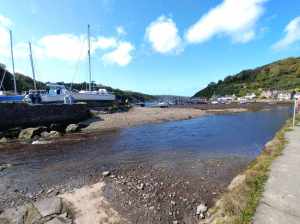

Moving on, our final stop came after spotting a sign announcing a burial chamber. A slight detour of around ten minutes from our intended route proved well worth it. After a short walk along a well-trodden path through fields clinging to the side of a string of coastal hills, we were amazed to come upon Pentre Ifan, a Neolithic exposed burial chamber. What we see today are the bare bones of a burial chamber that would originally have been covered by an earthen mound. The giant 5-metre ‘capstone’ appears precariously balanced on three ‘uprights’, yet it has remained in place for over 5,000 years. The surrounding Preseli Hills tower above, the source of the famous Pembrokeshire ‘bluestones’ that were used in the construction of Stonehenge, as well as Pentre Ifan itself.
We arrived at Cranog Cwtch around half past three, to be pleasantly surprised by a well-proportioned cottage nestled among a group of similar properties. The décor is clean and modern, and the facilities are excellent for a week’s stay. After unpacking, we made our way at 7 p.m. to the busy Ship Inn, just a four-minute walk away, for a very good evening meal and quite a few games of dominoes.

We slept well and woke to a fine day. Checking the cameras back home, we were pleased to see it was raining. Besides the rain being good for the garden, it was reassuring to know we’d chosen our location wisely and avoided having to don wet-weather gear. Sean had volunteered to water the tomatoes in the greenhouse, and I watched him through the cameras, hood up, as he completed the task while the rain lashed down. I wondered if he was reflecting on the curious contrast of his situation.
We made breakfast in the cottage’s small kitchen and decided to go for a ramble. First, we drove the short distance to the local petrol station and Spar shop to buy a newspaper and some necessary provisions.
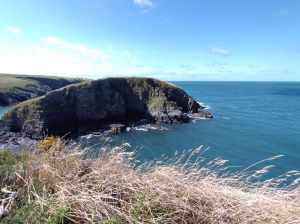
After plotting a route copied from a handy little book I found on the bookshelf, entitled Five Short Walks from Trefin, onto my GPS, we set off under clear blue skies. Joining a path leading out of the village, we soon enjoyed spectacular views of the sea and its rugged coastline as we linked up with the Pembrokeshire Coast National Trail. The path was narrow, squeezed between the fearsome drop of the sea cliffs and a barbed wire fence separating fields of cereal crops. Tall gorse, brambles, and heather lined the seaward side, providing a prickly yet effective barrier to prevent any accidental trips over the edge.
The sea had calmed since the previous day, and though we scanned the surface eagerly, we didn’t spot any of the seals that were supposed to be giving birth at this time of year. All we saw were three ships far out in the distance, which soon disappeared from view. The path was popular, and we encountered quite a few other walkers. For a while, we accompanied a couple from Mold in North Wales, but just short of Abercastle, we let them press on as they needed to catch a bus, while our route took us inland.

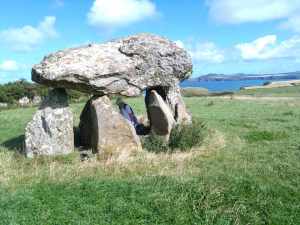
Picking up the pace, eager to return to Cranog Cwtch for lunch, we came across a Neolithic burial chamber known as Carreg Samson. The name translates as ‘Samson’s Stone’ and refers to the legend that St Samson placed the huge capstone in position using only his little finger. We paused briefly to explore its features, take photographs, and ponder how it might have been constructed. Its dramatic clifftop setting was perfect for the camera, which only improved as we continued, glancing back to imagine how spectacular it must have appeared to those approaching from the landward side in days gone by. Soon after, we came upon a narrow lane that led us back to Trefin and lunch. We ate our tomato and cucumber sandwiches, washed down with a bottle of Welsh beer, on the decking of the tiny cottage garden.


Feeling that my ankle wouldn’t manage an afternoon walk, we drove to the tiny fishing village of Abercastle, which we had skirted earlier that morning. We were fortunate to find the only remaining parking space near the harbour wall and soon set off to explore. This working port became famous in 1876 when it was the landing site of the first single-handed west-to-east crossing of the Atlantic Ocean, starting from Gloucester, Massachusetts, by Alfred “Centennial” Johnson.
We crossed the small stream flowing into the inlet via a slate slab and made our way up the far side of the valley, passing a row of charming fishermen’s cottages as we climbed. Opposite the small island called Ynys y Castell, we paused for a while to watch a group of intrepid youngsters coasteering, leaping into the sea from a rock beneath the cliffs. I envied them, but those days are long gone now! On our return to the car, it was low tide, so we spent a little time on the rocky and sandy harbour beach before driving back to Trefin.
That evening, we dined once more at the bustling Ship Inn before returning to our cottage and dozing off in front of the TV.

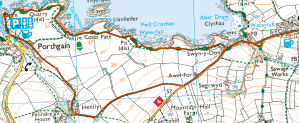
It had rained overnight, and the wind was gusting fiercely as we sat down for breakfast at the small table in our cosy kitchen. There was an unseasonal chill in the air, typical, we thought, of a Bank Holiday weekend.
I plotted a short walk on my GPS that took in part of the coastline, and after layering up with warmer clothes than on previous days, we set off into the blustery wind. The first part of our ramble followed the road heading east out of the village. Where the road met the coast at the Mill above Aber Draw, we paused to explore and take some photographs, grateful for the shelter the ruined mill provided from the gusts. Trefin Mill had served the villagers for around 500 years, milling wheat into flour for bread and grinding barley into winter feed for cattle and pigs. The mill eventually closed its doors in 1918.

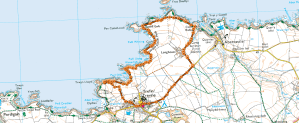
Our path then climbed steeply along the coast, passing the ruins of a larger building whose purpose eluded us. It was certainly very exposed to the elements and boasted magnificent sea views. Perhaps it had once been a quarry building or a grand house. Climbing even higher, we soon rejoined a section of the path we had walked the previous day, and thoroughly windswept, made our way back into Trefin.
We attempted to enjoy our lunch of sandwiches on the decking in the cottage’s small patio, but quickly gave up when the chill and gusting wind threatened to send our crisps flying across the rest of Wales.
In the afternoon, I plotted another short walk on my GPS. Once again, donning warm layers, we set off into the wind, taking a narrow alleyway between two houses that led inland.
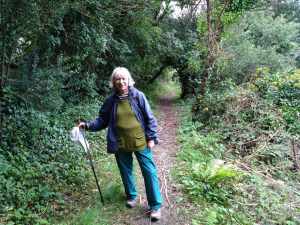

Our route took us down a muddy path into a valley before crossing a small stream and following a rutted cart track. Too engrossed in conversation, we missed a turn and had to retrace our steps back to the stream. From there, we ascended the far side of the valley through fields being prepared for silage. Having climbed to a higher elevation than Trefin, we paused briefly to discuss the location of some buildings becoming familiar to us.
On the return leg, we decided to cut the walk short and diverted to visit Crefftau Melin, a small café and shop showcasing local crafts, where we enjoyed some delicious ice cream. After a leisurely browse through the artisan wares, we returned to the cottage to relax.
Seeking a change of scenery for our evening meal, I searched Google Maps and found the Farmer’s Arms pub just an eight-minute drive away. We booked a table for 7:15 p.m., left the cottage at 6:45 p.m., and set off with TomTom for guidance. Fifteen minutes later, on a quiet country lane, TomTom announced we had arrived, only to find ourselves nowhere near the pub! Switching to Google Maps, we retraced much of the route and soon reached our destination. It’s clear TomTom has had its day, with Google’s app proving far more accurate. The meal was excellent, and the journey home took just eight minutes.
Around 1:30 a.m., the pie I had eaten earlier at the Farmer’s Arms made its presence painfully known. For the next couple of hours, I spent in the bathroom, emptying my stomach. Meanwhile, oblivious to my ordeal, Sue woke up and announced that her Fitbit had recorded her best night’s sleep in over eight hours. I passed on breakfast.

The longest walk of the trip so far had been loaded onto my GPS, and with the morning looking bright, dry, and accompanied by a fresh breeze, we decided to set off. Leaving the village eastwards, we rejoined the Pembrokeshire Coast Path by the mill we had encountered the previous day. From the opposite side, 24 hours earlier, we had spotted what appeared to be a stone circle, and today our route took us right past it. Although it doesn’t appear on any OS map, nor is there any information online or on a nearby board describing it, it is one of the many ancient stone circles scattered across this part of the country. Perhaps it hasn’t yet been excavated and so remains unrecorded in historical texts.
The walking was easier than our previous westward ramble along this national trail a few days earlier, and once again, absorbed in conversation, we failed to notice the absence of the regular beeps from my GPS that signal we are on the right route. In fact, this turned out to be a fortunate oversight. From the top of a cliff a few hundred metres off our intended path, we spotted a large seal in the sea and heard the calls of its mate nearby. Leaning cautiously over the edge, we saw a female seal with her newborn pup resting on a rocky beach below. We watched for some time, gradually gathering a small group of fellow walkers who, like us, were intrigued by the scene.


Moving on, a little later we realised our earlier navigational error and decided to continue along the coastal path to Porthgain, where we would pick up another trail to rejoin our original route. At one time, the harbour here was a busy hub for exporting slate from nearby quarries. Water-powered mills at Porthgain sawed the quarried slate slabs before shipment. In later years, the slate trade was abandoned, but Porthgain survived by turning to brickmaking, and later to the production of crushed roadstone. Large brick hoppers dominate the harbour; these were used to store crushed dolerite before shipment, and the site is now a Scheduled Ancient Monument. Slate was handled through the harbour from 1850 to 1910, and bricks were made in the harbour area from 1889 to 1912, utilising waste from the slate operation.

We tarried here awhile, resting our tired limbs in the sunshine and watching tourists risking the sharp rocks on the small beach at the end of the harbour slipway. The buildings, though ruined, are still very impressive and give the false impression of military origins. We had a little difficulty finding our intended trail, but after much consideration of my GPS, we eventually located it and headed towards Trefin.
Having extended our planned walk considerably, by the time we were about a mile from Carog Cwtch, Sue began to flag, so we opted to rest by an ‘honesty’ flower stand situated by a driveway leading to a small farm. Shortly after, we struck up a conversation with the occupants of a car who had stopped to purchase a bunch of blooms, and they kindly offered us a lift, which we gladly accepted. The fact that they drove a Porsche may have swayed our decision.
We spent the remainder of the afternoon resting in our cosy cottage, venturing out only once to visit the Spar shop to buy provisions for our evening meal.
It was forecast to rain, and rain it did. After breakfast, we set off to visit St David’s, the smallest city in Britain and a place of pilgrimage for centuries. Being just after the Bank Holiday and on a very wet Tuesday, we didn’t expect many other tourists, and we were right. Driving through this city, more akin to a large village, we encountered little traffic and were one of only two cars in the car park servicing its Cathedral dedicated to my namesake, Saint David.
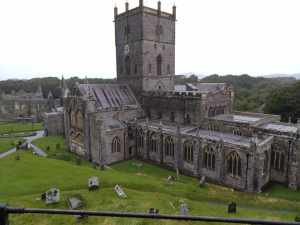
The 12th-century St David’s Cathedral sits tucked away in a sheltered vale beside the River Alun. David (Welsh: Dewi) is the patron saint of Wales, believed to have been born around 500 AD and to have died in 589 AD. Tradition holds that he was the son of Non and the grandson of Ceredig ap Cunedda, king of Ceredigion. He lived a simple life, teaching his followers to refrain from eating meat and drinking beer, something I cannot quite agree with! However, his symbol, the leek, is the emblem of Wales, and I must confess I’m rather partial to a nice chicken and leek pie washed down with a hearty ale!
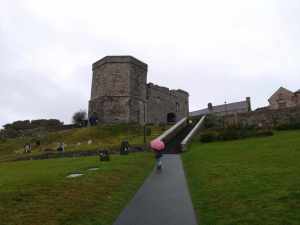
Spot the camera crew under umbrellas.
We arrived a little too early and had to wait about twenty minutes before the Cathedral opened, so we decided to explore the city. Passing by the gatehouse, we noticed a camera crew filming. When we asked the presenters standing nearby what they were up to, we realised we were being filmed as well. The footage was intended for a ‘Children in Need’ programme.
As I mentioned earlier, St Davids is quite small, and it took us just over ten minutes to stroll leisurely through its centre and back. The rain continued to fall, so it was with some relief that, upon returning to the Cathedral, we found it was finally open.


Unlike many cathedrals we have visited, entrance here is free, and as encouragement for it to remain so, we placed a generous donation in the collection box marked for the ‘upkeep of the building’. The cathedral currently houses a display of paintings by local artists, all of which are for sale, though this does nothing to detract from the fascinating history that seems to seep from every facet of the structure.
The cathedral is also the final resting place of numerous Welsh saints as well as Welsh royalty. The highlight is the shrine to St David himself. In the twelfth century, Pope Calixtus II declared St David’s Cathedral a place of pilgrimage. It was at this time that the medieval shrine was constructed and situated in the presbytery, close to the High Altar. Pope Calixtus II proclaimed that two pilgrimages to St David’s were equivalent to one to Rome, and three equated to one to Jerusalem. Well, having now completed one pilgrimage, surely being christened David counts as a waiver for two more?
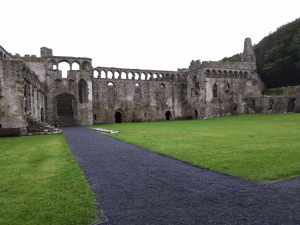
Exiting the cathedral into even heavier rain, we hurried to the Bishop’s Palace, but seeing that the ruins offered no shelter from the elements and with an entrance fee of £5, we decided it wasn’t worth the inevitable soaking.
We returned to the city and spent some time in the town hall browsing another display of local artists while the downpour continued. As we were leaving, the city suddenly became very busy with the arrival of several tourist buses. No doubt the local retailers were pleased with their custom.
With windscreen wipers swishing, we drove along narrow lanes to St Davids Lifeboat Station, which has been launching lifeboats since 1867 and whose crews have been awarded 14 medals for gallantry. The rain began to ease as we chose to eat the packed lunch Sue had prepared earlier, before venturing out of the sanctuary of the Mini Cooper.


The original two stations are reached from the cliff-top car park by a precarious set of concrete steps, made all the trickier by the rain. Sue chose to remain reading the information boards while I ventured down. After taking a few photos, I rejoined Sue, and we stood watching puffins fly from their nests on the cliff face out to sea for a while before making our way along the cliffs and down to the new station built in 2017. We were greeted by a pleasant lady who gave us a tour of the station and explained its history and workings. We were very fortunate to witness the crew lowering the lifeboat down the ramp for maintenance on the track and boat. By the time we had visited the little shop and made a purchase, the rain had stopped, so we made our way back to the car.
En route to Trefin, we chose the coastal road, stopping at a couple of beaches to stretch our legs and watch hardier holidaymakers surfing and coasteering. Back in the warmth and shelter of Cranog Cwtch, we spent the rest of the afternoon doing nothing. Bliss!
During the evening, we dined on quiche and salad and watched a film on Netflix.
We woke to the sad news that Aunty Doreen had passed away during the night. After a fall last month in her convalescent home, she had been left quite fragile and had since lost a lot of weight.
It was drizzling as we had breakfast, but thankfully this disappeared as we left Trefin to drive to Strumble Head Lighthouse, built by Trinity House in 1908 to mark the dangerous stretch of coast between Ireland and Wales. The lighthouse stands imposingly on St Michael’s Island, an islet to the west of Fishguard, separated from the mainland by a very narrow gap. It was a slow half-hour drive along mostly narrow, high-banked country lanes with sharp bends threatening a collision at every turn. It was early, and we were lucky to meet only one oncoming vehicle, the twice-daily Strumble Shuttle minibus.
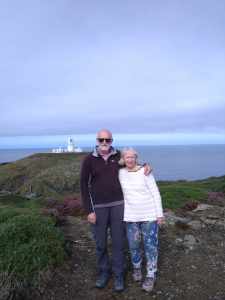
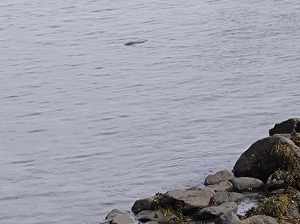
The car park, located high above the lighthouse atop the mainland cliffs, already had a few cars belonging to enthusiastic twitchers armed with long-lens cameras and monoculars, keen to observe the many seabirds found here. We descended along the path that led to the steps, taking us to the footbridge across the narrow sound. Unfortunately, access across the bridge to the steep steps leading up to the lighthouse was barred by a metal gate, but we found amusement watching a male and female seal at the entrance to the sound. The larger male was ‘bottling’, sleeping in the water with his body submerged except for his head, while the more alert female scoured the seabed for crabs. We watched and photographed them for around fifteen minutes before picking our way along a cliff path, which took us to a brick-built building perched high above an increasingly calm sea. The structure was part of a secretive WWII initiative to use microwaves for communication. Inside, we came across a couple of twitchers engrossed in watching the seabirds frequently flying by; we left them to their excitement and satisfied ourselves with reading the many information boards provided by the RSPB on the internal walls.
Returning to the car, we made our way to the tiny hamlet of Trefasser. The road was now much busier, and many times we had to reverse or pull over to allow oncoming vehicles to pass. We found a rough car park between two tors which, according to my OS map, reportedly had an ancient fort perched on each. We had our lunch, purchased from the petrol station as we left Trefin, before setting off on a ramble to see some standing stones and a burial chamber, as also indicated on my OS map.

It was a tough ramble. Access to the standing stones was relatively straightforward along a well-used path, but the burial chamber lay off-track and could only be reached by thrashing through tall bracken, brambles, and gorse. The going was hard, and Sue had had enough by the time we reached the top of a tor; she stayed there to wait for my return. Determined to find the ancient monument, I pressed on, regretting the energy I had already expended, when I finally discovered a large stone slab bearing simple carvings. It hadn’t been visited for many years, and its surroundings had reverted to a Welsh mini-jungle.

Returning exhausted, we retraced our steps and photographed a large number of standing stones, seemingly unloved and mostly hidden by undergrowth. By the time we reached the car, it was warm and sunny, and we were much in need of a bit of pampering. On the way back to Cranog Cwtch, we stopped at Tregwynt Woollen Mill. Weaving was first recorded at this whitewashed mill in the 1841 census, but Melin Tregwynt was founded by Henry Griffiths, who bought the mill in 1912. It is still in production today, and also features a shop and restaurant. We chilled out with a delicious ice cream each and made a few purchases.
That evening, we ate again in the cottage and watched TV until sleep beckoned.
Our first stop after breakfast today was the peaceful St. Davids Airfield, once a hive of activity during WW2 as an RAF Coastal Command base engaged in the Battle of the Atlantic, but now long abandoned. It is classed as a Site of Special Scientific Interest (SSSI), encompassing heath and wetland of national importance, and includes a ring of ancient standing stones within its bounds. The site is popular with local dog walkers and horse riders, and a herd of resident semi-wild horses roam the area, tasked with keeping the vegetation in check.


It was a short ramble to the standing stones, eleven forming the circle, one offset inside, and a central altar stone with two small steps. We wondered what the airmen of yesteryear, risking their lives daily, might have made of this ancient monument. Did they believe it brought them luck?
We then drove on towards the coast, stopping at the small fishing village of Solva with its charming harbour, beach, pubs, and eateries. It is a popular starting point for coastal walks, which is exactly what we did. After parking up, we crossed the stream running through the harbour and found the path that took us up ‘The Gribben’, a ridge of woodland and rock ending in spectacular views of the sea and coast. It was once the site of an ancient settlement.
We sat a while with binoculars, scanning our surroundings, fascinated by the sight of two geologists armed with hammers and magnifying glasses examining rocks that had fallen from the cliff face of a small inlet below. Try as we might, we couldn’t spot any seals, only hikers making their way along the Pembrokeshire Coastal Path.
We made our way back to Solva via a trail running down alongside the stream and past dozens of beached yachts. The day was warming nicely, and families were settling on the sand as we picked our way past excited family dogs, tails wagging, eager to play in the water.
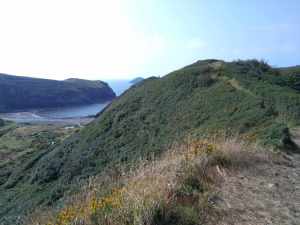

We secured a picnic table in a prime spot at the heart of the harbour and enjoyed our lunch while watching the antics of fellow holidaymakers. With appetites satisfied, we took a short stroll through the village to explore its charms and came away with a very favourable impression. Solva is well worth a much longer visit, very pretty, with plenty of activities, accommodation, restaurants, and pubs.
Next, we made a brief stop at Newgale and its two-mile-long Blue Flag beach to watch the surfers having a great time. The beach is backed by a large pebble bank, formed by a major storm on 25 October 1859, which now acts as a sea defence. It reminded us of Chesil Beach in Dorset, though at 18 miles in length, that’s where the comparison ends. The waves were impressive, providing plenty of fun for those brave enough to endure the 15 °C water temperature.
A little further along the coast was Nolton Haven. This picturesque hamlet was once part of a thriving coal-mining area; between 1850 and 1905, several local collieries mined seams of anthracite running beneath the sea. Nolton Haven itself was a small coal port that exported coal from Medieval times. Today, it’s a perfect spot for families with children to enjoy a sunny day. We spent some time on the beach, watching two lifeguards going about their duties before moving on.


En route to Broad Haven, we paused briefly to explore a spot on the high cliffs signposted as Druid’s Stone. Expecting an ancient standing stone, we were disappointed to find it was actually the name of a large building, probably a hotel. However, while resting on a bench accompanied by a large sculpted stone fish, we did enjoy the stunning seascape before us.
Arriving in a very busy Broad Haven, we struggled to find a parking place. The sun and the vast expanse of golden sand had enticed visitors from the many caravan sites on the village outskirts out to enjoy the beach. Reluctantly, we admitted defeat and headed inland back to Trefin, stopping only to fill up with fuel and buy some ready meals for the evening.
The weather forecast was good for our journey back to Market Harborough and, though it was a Friday after the Bank Holiday weekend, we set off just after 9 a.m., optimistic that the predicted five-hour drive would be trouble-free. It was not.
The stretch to the A48 and then the A40 passed relatively quickly, but the further east we travelled, the heavier the traffic became as West Wales emptied of the last of its summer holidaymakers. On reaching a road where we should have picked up the pace, the M40 told a different story. South Wales coast holidaymakers joined the queue exiting the country, slowing us to a snail’s pace. Roadworks and several accidents brought traffic to a complete halt several times, and it was with some relief that we reached what we thought would be the final bottleneck, the second Severn Crossing, officially named the Prince of Wales Bridge. We were wrong. After queuing to squeeze across on just one open lane (where were the workers in the coned-off lanes?), we crawled past a series of accidents near Bristol on the M5. Seeing much of the motorway network turning red along the rest of our route, we eventually took Google Maps’ advice and left the motorway near Cheltenham, heading northeast across country. We still had to navigate around several accidents, but at least progress improved. It took just over seven hours to get home, the longest I have driven a car for well over a decade. If the car hadn’t had cruise control, I’m sure I would have been too exhausted to drive safely.
Opening the post and reading its contents with a cup of hot coffee after such a long journey was just the tonic needed to finish our little adventure in South Wales before we unpacked and immersed ourselves in the humdrum of the real world.
Family news: Alice has started her first day at school. Jamie and Ruth have flown to Monza in Italy to see the Italian F1 Grand Prix. Charlotte and Suraj are having major alterations done to their garden, and Charlotte helped organise a friend’s wedding.





Leave a Reply